Friday, November 26, 2010

Monday, November 22, 2010

Saturday, November 20, 2010
Autumn Blessings

It only makes sense they arrived in the autumn, when harvest is sweet and pungent in the air, when the greens and golds, scarlets and purples clothe the earth.
Saturday, November 13, 2010
FL Arts Council Awards Reception, 2010
 Before reward is defeat, before prominence, lowliness,
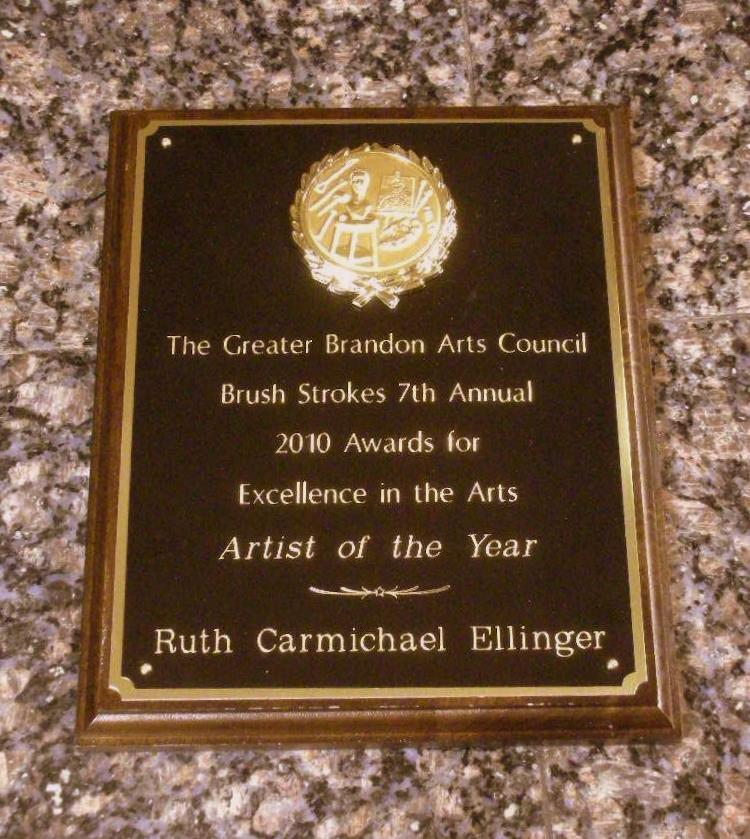
The Shepherdess wins an award...
“The Awards event was truly a night to remember…one of those thrilling times when the unexpected becomes a reality. I truly had no idea that I was being considered for this great honor. When Cheryl Kuck, chair person for the Arts Council phoned saying I had been chosen “Artist of the Year” for excellence in the arts, I felt certain there must be a mistake. Little did I realize that my writing and my involvement in teaching in our community would result in this award. I felt so blessed, so special. My prayer has always been that God would order my steps and guide me in the way I should go, to use me in a way that would honor Him through my writing. Surely, this is one of those surreal moments. “
Ruth Carmichael Ellinger
Saturday, October 23, 2010
What I've Been Doing

What I’ve been doing in October: Toured the OH area for two weeks doing book events for, Sword of the Wild Rose. The fall colors were spectacular with weather to match. Visited friends and family and attended the Fairfield CO Fair. Sat in the grandstand and watched the bands, reminisced, and walked through the horse barns. I love the smell of horse, hay, and sweaty leather.
What I need to do today: I need to do something with my hair and prepare for writing group tonight. Our writing prompt for October’s session of Brandon Christian Writers is: One dark night…(OOOOoooaaaahhhheee)
In the kitchen: I have some left over pork roast for pork tacos for and early dinner. An easy one to make so I can speed out the door to meet with my writing group.
What Wright is doing: Catching up around the yard, cleaning the spa, gardening – his favorite therapy.
I’m hearing: The air conditioner still running, music playing in the background, the door opening because Audry (my ten-year-old granddaughter) left her new little purse.
I’m learning: When the "illusion" in our mind crumbles and falls away, what remains is reality...the actual truth. Yes, it may not be what you imagined or what you dreamed it would be, but that does not change God, nor does it change His word, the crux and foundation of our faith. Loyalty, integrity, and trust in God are essential virtues when disillusionment becomes the tool of Satan to undermine our faith. Holding steady when illusion gives way to reality is where faith becomes what it is meant to be -- the substance of things hoped for and the evidence of things not seen.
I’m reading: Beloved Enemies by Al Lacy. A great Civil War novel that covers the onset of the war and the Battles of 1st Manassas., A beautiful woman who is also a Confederate spy and the hunky Union soldier who falls in love with her supplies sufficient conflict against the backdrop of civil war. Beautifully crafted by Al Lacy and historically accurate. The romance is a little more than I like, but that is just me. A good read for those who love historic fiction and I do.
I’m Creating: an “organized looking” space in my writing are (large foyer of our home) for the Tampa Tribune reporter to take photos for the upcoming Brush Strokes awards reception. Yes, I was surprised and honored to be chosen as “Artist of the Year” 2010 by the Arts Council, Brandon FL. Yeah!
My favorite things in October: Autumn colors, my family, Wildrose Cottage in autumn, apples and pumpkin pie, Florida evenings, and fires in the fireplace again.
Thursday, September 16, 2010
“Give it a Rest”

There is a Place…
There is a place where you can always go, come with me,
Where it’s alright to let your feelings show, come with me.
What a pleasant journey, isn’t very far,
We can go together, stay right where you are
And now it’s time to start, it’s right here in your heart.
There is a place where you can be yourself, come with me,
And it’s a place where you can free yourself, come with me.
And you know it’s waiting, no so far away
Need no reservation, we can go today,
Now it’s time to start, it’s right here in your heart.
And the light shines through each window, and the door is open wide
And each question has an answer, if you’ll only look inside.
There is a place where every sorrow ends, come with me,
Where every hope and every truth begins, come with me
What a pleasant journey, isn’t very far,
We can go together, start right where you are,
Now it’s time to start, it’s right here in your heart.
….And now it’s time to start, it’s right here in your heart.
♥

“I have a problem…” I say sipping my coffee.
“What?” he asks sitting his cup down, giving me his full attention.
“I’m multi-tasking, stretching my limited time, and directing my energy into solving everyone else’s problems.”
“Oooo,” he says raising his eyebrows.
“I’m weary of teaching women how to set priorities, solve problems, manage time, how to mend and maintain relationships. I’m teaching others when I need to be managing these same issues myself.”
“I see,” he says.
“I need a rest, a break. You know, like…give me a break, give it a rest, and in fact, I think I’ll run away.”
“I know a place,” he says, “a place where we can both go, where we are free to rest.”
“Where?” I ask.
“Well, Jesus rested when he was weary. He found it necessary, so it’s not strange that you should feel the same way. He ran away too—all by himself.”
“I know, but that was different,” I say with a sigh.
“Not really,” he says, “in Exodus, God commanded His people to rest, the Sabbath—you know. And Jesus said in Mark 2:22, that the Sabbath was made for man and not man for the Sabbath. Not only that, He let people know that the thought of Sabbath was “rest” not rules.”
“Well, that’s obvious,” I say to my Shepherd husband, “since he broke so many Sabbath rules himself.” I feel a sermon coming on and I want a rest from that too.
He smiles, knowing what I am thinking. “In the Hebrew letter,” he continues, “the word Sabbath is from the Greek, shabbat, which means to cease, or to stop, to rest, if you will.”
“But I can’t stop to rest,” I protest“, my life is so full, I can’t take on anything else. In fact, I don’t think I can take anymore preaching either and I feel like that’s what you’re doing right now.” Guilt tugs at my heart and I see compassion in his green eyes.
“Time to empty out,” he says, “time to rest.”
After this conversation, I began to think about what my husband had said about emptying out, about resting. I wanted to find a resting place. After all, Jesus said He was our rest, our Sabbath.
I understand that life is more than work, money, and homes, all our earthly endeavors, all our lofty ambitions, our plans and strategies for the future. I know this in my head. By seeking the principle of rest in my life, I have learned some valuable lessons. I have learned to experience rest in my heart and spirit.
To truly rest from the labors of life, we must learn to restructure our lives around God, not ourselves. How easy it seems to take life into our own hands, make our own plans, then find that we cannot manage them. Therefore, it is essential to empty our vessel of those things that are filling our lives with our own doings and allow God to re-fill our lives with grace and beauty and joy. If we do not, life will be only an existence and no real life at all.
The Sabbath under Christ, the Lord’s day, is a day unto the Lord, an entire day, a small gift of time that we give back to Him who has given us six days to work and one day for Him. In doing so, we give ourselves the gift of rest from our earthly labors. (Exodus 20:10; Deuteronomy 5:14).
Under the law of Christ, the Jewish Sabbath is no longer observed as an ordinance or law, but that does not mean that we should not rest from all our distractions, our work, our daily routines. The principle of the Sabbath, or a day of rest should still be observed. Most Christians observe this practice on the Lord’s Day, the first day of the week—Sunday.
Sad to say, even the Sunday “rest” is slipping away from our modern society. The malls, the amusements, and almost every type of commerce is still conducted on Sunday. Our society has become lax in observing the principle of rest. Even our college students are taking tests on Sundays.
The principle of rest is sadly missing from our society and it is affecting our lives, our homes, our worship, and our attitudes toward God and His work.
In observing the principle of rest, we find delight in God, we renew our faith, find joy in living, happiness in simplicity. We become mare aware of our own dependency upon a Sovereign God and not on our own intellectual ability to work out our own lives according to our own plans.
To find this place of rest and our own personal “Sabbath,” we must first empty our vessel of those things that are choking our lives with meaningless and unproductive clutter. Some things are necessary, but if we consider our daily lives, we will find many things that can be eliminated. However, we must be willing to set them aside and to rid ourselves of those things, however dear, are in reality, unnecessary.
We must learn to stop and rest.
Busy people, workaholics, over achievers, perfectionists, and all un-restful and unfruitful, and unproductive lifestyle habits must cease, must stop, and some must permanently end. You know what brings you down, what keeps you from God, what keeps you from rest…unload it.
On this one day, empty yourself of all your concerns, all the things on your “to do” list, your household chores, your upcoming schedules and appointments. Turn off your cell phones, your computers, every distraction in your life. Just rest and worship, reflect and meditate. Allow God to pour into your vessel the life giving grace, joy, and peace, those things that keep us close to God. If we learn to do this, then we can manage well during the next six working days of the week.
Our personal rest can be a time to stop and “smell the roses,” to enjoy nature, our children, our parents. It can be a time to read for pleasure, to roam, to walk, to dream. Quiet the internal noise of life and learn to tune into God and hear His voice. Find a secret place, take a long nap, rest…rest…rest from your labors.
In learning to stop and rest for one day a week, you will find you are more energized, more creative, more the person God intended you to be. The principle of resting can do more for you than all the vitamin B-12 you can consume or all the caffeine you can drink. Give yourself a rest!
©2010 Ruth EllingerTuesday, August 17, 2010
One little lamb...
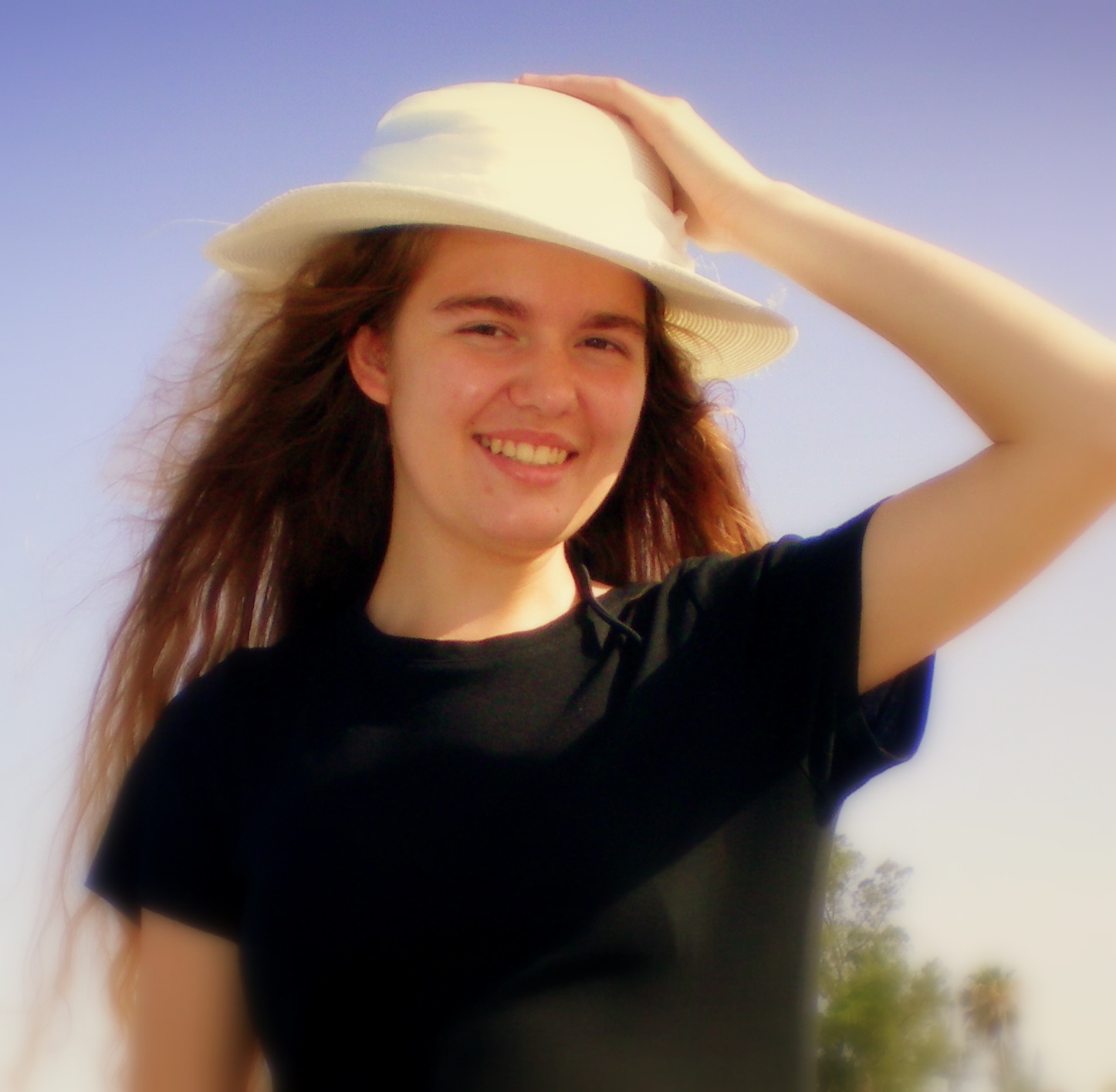
Before I left for Wildrose Cottage and my last book event of the summer, Mandy came to visit. We spent three glorious days on the beach on Long Boat Key, just Mandy, Papa, and me. It was a special time; a time I know will never come again, not in the same way. There may be other visits, other beaches, and other memories, but none quite like this one. I feel sad when I think of it, but I know this is the way of life, the way it must be.
Mandy is sweet sixteen, with taffy hair and brown eyes. Her voice is sweet, and her way is kind. She is at that magical age when girlhood is melting away like footprints left in the sand, disappearing with another wave. She is a woman-child, waiting…watching, looking into the golden sunset, wondering what life has in store for her.
God has a plan for her life and I’m thankful for a little part in that plan. I want to be there if she ever needs me. I was there when she drew her first quavering breath. I will never forget that night as long as I live. It was a wintry night, cold and snowing when she came into the world.
I remember too the look on Katherine’s face when first she held the baby in arms and peered into the tiny face. It was a look of love so profound that no artist could ever reproduce it. There was that instant connection, a bonding that in some unfathomable way, will last a lifetime and beyond, no matter what comes. I have felt that awesome, indescribable bond when my own babies were born. True, they may leave us in a physical sense, but that attachment which binds us together at birth, can never be broken.
The years come and go and we see God’s hand weaving the tapestry of our lives. One golden thread in our tapestry is Mandy, and we treasure the moments, the days she stopped by Tanglewood to visit us in her journeyto womanhood. We are blessed.

Friday, July 16, 2010
The Flock Moves to Higher Ground


Ps
Hab 3:19 The LORD God is my strength, and he will make my feet like hinds' feet,
and he will make me to walk upon mine high places.
CLIMBING...to higher ground
It was spring and the sheep had to be moved to higher ground, to a pasture on top of an abruptly rising hill. There, the grass was young, tender, and un-trodden, with a large and rolling pasture that stretched for miles. A spring bubbled from the side of a rock precipice to form a brook that ran the length of the high pasture and emptied into the valley below. It was a goodly place for the sheep.
The shepherd stood at the top of a small rise, explaining the necessity of moving to higher ground. His instructions to the flock were clear and concise, leaving no room for misunderstanding. He would lead the way himself and I, his shepherdess, would act as rear guard, following behind to insure the safety of the flock. Rear picket duty was not my favorite position, but quite often, I found myself in that particular situation and it was certainly not by choice. Nevertheless, the move lay ahead and was necessary for grazing during the summer months.
We left the next morning; sheep, shepherd, and shepherdess. From my position at the rear, I watched the wooly procession as the shepherd climbed steadily upward, his staff raised, his form silhouetted against the skyline, clearly visible to the entire flock. Now and then, he spoke, encouraging the flock as they climbed. Some of the sheep followed obediently, not looking back, staying close to the shepherd. Others bleated pitifully, not wanting to leave the old and familiar, but despite their complaining, they followed along steadily enough, bleating as they climbed. Others lagged behind as if to protest the move, until a sharp word from the shepherd changed their mind and hurried them along.
From my position in the rear, I shooed the dallying sheep forward, those who lingered just beyond sight of the shepherd, hoping to find some pleasure along the way. They were not opposed to the move, just fooling around, hoping to discover some new adventure. The curious youngsters stopped every few minutes to butt one another or hide from his comrade behind a thicket, not considering that danger that might lurk in the shadows of the dense undergrowth. Again and again I brought the careless sheep back to the main flock, scolding them soundly for their indifference to danger. When at last the stragglers and I arrived at the higher pasture, the main flock were romping in the tall grass, forgetting that they had ever grumbled and complained about the difficulties of the climb or of moving to higher ground. Surely, this was a goodly place to be.
©2010 ruth ellinger
Thursday, June 24, 2010
A ladder and a rose...

My husband brought the rickety looking wooden ladder from the shed and placed it against the side of the house where it extended several feet above the roof. He had purchased this particular ladder at a yard sale for a pittance several years ago. He just couldn’t resist the old relic. Now, he ran his fingers over the weathered old rungs where the endless march of feet scaling the ladder had worn grooves into the rungs. He looked at me, already knowing my thoughts.
“Well, honey, just think of all the people who have climbed this ladder, attained new heights, and worked hard to keep things in good repair.” He cocked his head to one side, waiting for my reply.
“Ummm,” I said, not very impressed with his estimation of the old ladder.
“Well,” he mused with his ‘benefit of the doubt’ voice, “I can climb on the roof and do that much-needed repair I’ve been putting off—you know, the one over by the chimney? Didn’t I tell you this ladder would come in handy sometime down the road? Besides,” he continued as he shook the ancient ladder that wobbled precariously while he tested it for durability, “this repair has to be done.”
“Why don’t you use your good ladder?” I queried.
“Because ‘someone’ borrowed my good ladder and didn’t return it…as usual,” he said frowning. “This one will have to do.” He gave the ladder a few more vigorous shakes, propped it against the house at a better angle, then looked at me rather sheepishly. “Will you hold the ladder for me?” he asked.
I surveyed the situation dubiously and said, “Looks kinda dangerous to me,” I commented. “Maybe you should wait until your good ladder finds its way home.”
“I can’t wait,” he said glancing at the sky where dark clouds were gathering on the western horizon. “It’s supposed to rain for the next two days. I really need to get this job done before we spring a major leak.”
“Oh, all right then,” I said with a sigh, “I’ll hold this pathetic ladder, but please, whatever you do—don’t fall—please! There’s no way I can catch you.”
Carefully, he mounted the steps of the ladder, testing each rung carefully as he went. I grasped the sides of the ladder, holding it steady as he climbed, my heart thumping in my chest, breathing a prayer and releasing a sigh of relief when each rung held fast.
Once on the roof, he made his way across the shingles without incident and climbed to the rooftop where the chimney met the peak. He retrieved several shingles from his tool pouch and before very long, I head him whistling and working away with hammer and nails and roofing tar.
I brought a lawn chair and sat near the rose covered trellis that meandered up the southern wall of the house. It was a lovely heirloom climbing rose and the arbor afforded a wonderful place to wait until my husband finished his job and needed me to hold the ladder again. I could smell the pungent odor of roses as they wafted on the summer breeze. The sky along the western horizon was growing dark and ominous with rolling purple clouds. My husband was right—a storm was brewing.
From the edge of the roof, he called my name, and I took up my position as chief ladder holder as he began descending the ladder. He paused just above the roofline and reached for a particularly large and brilliant yellow rose, which he deftly cut off with his pocketknife. When he was safely on terra firma again, he handed the rose to me, a misty look forming in his green eyes.
“For you, my love,” he said simply, lifting my free hand to his lips. “For all those times you’ve held the ladder steady in my life—when things felt shaky and I trembled under the load, you were always there, holding the ladder firm, making sure we were safe—making sure the sheep were safe. Thank you for always being there.”
A mist rise to my own eyes. “I only held the ladder, that’s all.”
“No, it’s more than that. It’s much, much more,” he answered. “When I am up there at the top, exposed and vulnerable to the elements and to my enemies, and everyone’s eyes are upon me, it is comforting to know you are there, holding me steady, holding that wobbly, shaky ladder. I could not do this alone, not without you.”
Squeezing his hand, I recalled the many times I had complained of my unromantic, purely functional role as the chief ladder holder; the one who must keep everything together, everything safe, endeavoring to make things work and run smoothly, always holding the present project steady and on time. Just now, the gift of this one solitary beautiful rose, a token of his genuine appreciation, touched my heart. The analogy spoke volumes to me. After that, holding the ladder for him became more than just a duty, it was a special place of responsibility that was generated by my love for him, for the Great Shepherd, and for the sheep. I remember it often, and as time goes by, or when life becomes difficult, I remember the ladder…and I can still smell the rose. ~~
2010©ruthellinger, all rights reserved
Thursday, May 6, 2010
HAPPY MOTHER'S DAY!

My Mother’s Hats
One evening last winter, I began the arduous task of sorting through old family photos and organizing them into a chronological chaos of sorts. I began this project with childhood photographs of my parents and grandparents. And, as all organizers of old photographs know, I was soon lost in reverie and reflection.
One distinguishing detail I noticed in the photos of my mother was her obvious fondness for hats. Thinking back over the years, I could not recall my mother going anywhere without her hat. She wore this fundamental part of her wardrobe whenever she went to town or to church or anywhere the least bit important. In fact, she wore a hat while she gardened or gathered eggs, and always at family picnics. She just loved hats!
When hats became unfashionable and everyone was going bareheaded, (even in the winter) and claiming freedom from traditional fashion, my sisters and I begged Mom to stop wearing her hats. We felt so embarrassed when Mom arrived at the PTA meeting or the band concert in her “proverbial” hat.
“Mom,” we would plead, “hats are out!”
“Well,” she replied, “I haven’t noticed the queen giving up her hats! Hats are worn by ladies and real ladies should always wear a hat. I just don’t feel complete without a hat. You girls may go bare headed if you like, but it’s not me and I must be comfortable with myself. Besides,” she said in wistful voice, “it is a nice custom, the reflection of a kinder, gentler age.”
Mom stuck to her philosophy and we grew up, married, and had homes and families of our own. We gave up the notion of trying to persuade Mom to give up her hats. Instead, we added to her collection by buying hats for all the special occasions in her life. Personally, I loved the idea of wearing hats, but I could never quite capture that same confident look, the poise and grace that made Mom look great in a hat. She wore hats with taste and charm.
Looking at the old photos just now, I came to realize that somewhere through the years; I had nearly forgotten that we girls tried our best to talk Mom out of her beloved hats. How glad I am now that she was true to her own self. Her hats were a representation of her own identity; an integral part of her character that said, I am a unique person; a woman with my own special set of convictions, my own objectives and ideals. I am me, and I am not afraid to be me.
After Mom passed away some years ago and we children lingered at the graveside, knowing our lives would never be the same without her, we said our good-bys and slowly began to leave the little country cemetery. As a last token of love and respect, my brother quietly laid her favorite hat on top of the casket.
“Bye Mom,” I whispered softly, laying my hand on the casket, touching her cherished hat for the last time, “you were truly a great lady; you taught me so much, especially how to be myself.”
Ruth Ellinger©2010 all rights reserved
Monday, May 3, 2010
The Sheared Sheep

The Sheared Sheep
“Now no chastening for the present seemeth to be joyous, but grievous: nevertheless afterward it yieldeth the peaceable fruit of righteousness unto them which are exercised thereby.”
Heb. 12:11
Have you ever felt like the little sheep who was singled out and sheared to his very skin? I have been on both sides of this picture – as one who received the shearing by the Spirit of God until I felt naked and vulnerable, and as the one who administered the shearing to other sheep. It is a necessary part of raising sheep, but not always a pleasant duty. But later, when the fleece grows out again, the wool is soft and beautiful. This is the result of shearing.
The fleece or wool that is the coat of the sheep, must be cut off, sometimes so close that the little sheep appears to be naked. He shivers in his state of nakedness and looks quite ashamed and desolate.
Once a year, in early adulthood, the sheep is sheared or shorn by the shepherd, usually in the spring. The sheep are gathered into the shearing shed and the shepherd and his helpers get to work. Most sheep submit to this practice, but there are a few who resist with a bitter bleating. But if the shepherd is skilled, he can do the job quickly and painlessly – if the sheep submits that is.
But first, the sheep must be washed, made free from the burrs, vegetation, and dirt that tends to cling to the woolly coat. After carefully washing the sheep, a skillful shearer can cut the wool off quickly. Then the wool is marketable as ‘cleaned’ wool. Dirty fleece is harder to shear, more difficult for the sheep to endure, and dulls the cutting instrument of the shepherd.
I remarked to my shepherd husband last week, “You really cut close on that little sheep, didn’t you?”
“Yes,” he said, "it was a close shave, but then—he had gotten into a briar patch. He needed to be sheared.” Then he smiled. “But he just laid down and took it, then hopped up and went on his way.”
ruthellinger@2010 all rights reserved
Jesus said, “I am the good Shepherd. The good Shepherd giveth His life for the sheep.”
John 10:11.

Thursday, April 8, 2010

The Dogwood and the Cross
The Ohio farm where I grew up was a natural wonder in the spring of the year. After the long dreary months of winter, my eyes were hungry for fresh color and growing, blooming things. Daffodils, tulips, and iris, bloomed in the flower beds around the house, and flowering trees were abundant throughout the county. The red bud was a favorite, and of course, the apple, peach, and cherry trees were delightful. I loved to wander through the woods and hillsides to smell the pungent odors of earth warming with the fragrant scents of another Ohio springtime. My favorite blossom was the flower that adorned the dogwood tree.
The hill across from the farmhouse had several of these unusual trees, and I would gather branches to bring into the house and place in tall vases of water. The tree bloomed around Easter every year and the blossom of the little dogwood tree held a legend that made this particular blossom special above all others. The bloom is white or pink, and in the shape of a cross. A brownish stain marks the end of the blossom, symbolizing the nail prints in Jesus’ hands. In the center is a yellowish crown of thorns reminiscent of the one Jesus wore on his brow. My father shared the legend with me when I was a child, and I have never looked at the blossom without thinking of my own father and of Jesus and His love for me. When my father passed away many years later, it was in the spring of the year. I climbed the hill and gathered a great bouquet of dogwood branched to lay on his grave. I think he would have liked that.~
Legend of the Dogwood
An old and beautiful legend has it that, at the time of the crucifixion, the dogwood was comparable in size to the oak tree and other monarchs of the forest. Because of its firmness and strength it was selected as the timber for the cross, but to be put to such a cruel use greatly distressed the tree. Sensing this, the crucified Jesus in his gentle pity for the sorrow and suffering of all said to it: "Because of your sorrow and pity for My sufferings, never again will the dogwood tree grow large enough to be used as a gibbet. Henceforth it will be slender, bent and twisted and its blossoms will be in the form of a cross -- two long and two short petals. In the center of the outer edge of each petal there will be nail prints -- brown with rust and stained with red -- and in the center of the flower will be a crown of thorns, and all who see this will remember."
The Cross
The cross is a well-known and beloved symbol of the Christian faith and represents the instrument used to crucify Jesus Christ, the sacrificial “Lamb of God” who purchased the free gift of salvation for all who believe. We who have knelt at the foot of this old rugged cross, have felt the agony of His passion and the selfless love poured out for our redemption. We understand in part the undeniable beauty of this crude emblem. How rough and harsh is this symbol, but oh how beautiful and magnificent is the impact and significance of the Christian cross.
©2010 Ruth Ellinger all rights reserved
Wednesday, March 17, 2010
Song for the Shepherdess

Arriving at church on Sunday morning, my heart was heavy with many concerns. I felt like Martha when Jesus said in St. Luke, 10:41; “Martha, Martha, thou art careful and troubled about many things.”
Yes, I admit to myself, I do feel troubled and filled with many cares. I would prefer to be like Mary. She sat at Jesus’ feet seemingly without a care, listening to His quiet, gentle voice, feeling His closeness, content in His presence. She wasn’t concerned with household tasks or what others were doing. I need to hear Him too, I think. I need to know that He cares for me. In my mind, I know that He does, but I want to feel the caring in my heart. This particular Sunday morning, the pew feels lonely and so do I. Other wives sit with their husbands, but I sit alone, just as I have year after year.
But…I am a Shepherdess. Therefore, it doesn’t matter that I don’t feel well today, or that I am hurting because of someone’s thoughtless remark. It doesn’t matter much to anyone that I have company coming and I should be cleaning my house, but instead, someone needs my extra time and attention -- regardless of my own needs. This sacrifice is expected of me. It is my responsibility, my place in the Body of Christ, my calling. I am the Shepherdess, the selfless giver of time and attention. Most often, this is okay. With God’s grace, I can handle it. However, there are times when I feel that niggling dissatisfaction with my role. Tears spring to my eyes and I feel that ugly old spirit of self-pity take up residence next to me in the pew. I sigh; weary of this age-old battle.
I think, if only I could fly away to some mountain paradise, swing idly in a hammock on a tropical island, drinking lemonade while warm breezes blow over me, or perhaps become invisible at will, disappearing from those who seek my advice and attention, or maybe I could launch a new career, or live in a romantic new location.
But…I cannot. I cannot choose my own path, and given the opportunity, perhaps I would choose the wrong road. Thankfully, He chose me, and because He set His love upon me, I feel safe, secure. I will set my own plans aside for His sheep, the sheep whom the Shepherd loves.
Then…the pianist begins to play for the offertory. I sit in the pew waiting for her to finish, but after a few bras of melody, she lifts her voice in a poignant, soul-stirring solo that speaks volumes to my troubled heart. The ‘Good Shepherd’ speaks to me in song, sharing His love and sympathy with me. I am the one He has chosen for this work, for this place in His Kingdom. This is our special moment together, a song for me, His Shepherdess, the one who cares for His flock.
This song, with its encouraging words and enchanting melody, is meant for me alone, and it speaks of His tender care and His understanding of my weakness, of my personal plight. To know that He sees me, that He cares, cause my troubles to lift like the rising fog of the misty morning. I feel contentment wash over me, bathing my soul with a warm and soothing balm, breathing life, encouragement, and joy into my spirit. I can do this, I say. I can go on.
©2010 Ruth Ellinger all rights reserved
Friday, February 5, 2010
It's Good to be Queen...
 Ah…it is February, the month when hearts are turned to love and romance, a month that reminds us that love is still the strongest emotion of the heart. The Bible says love is “stronger than death” and many waters cannot drown it. Romantic love between a man and woman is a driving force that men will fight for, will die for. Once upon a time, two classmates (possibly seventeen at the time) had a heated altercation over who would be my date. I thought, “What strange beasts men are,” but on reflection, I was flattered to think they would actually fight over me. I realized then what a strong force love can be and how it can move people to act and react in tender or aggressive ways.
But without love…life would be dull, meaningless, without color and contrast. February is the month we make the conscious effort to show our love by sending flowers, buying cards and chocolate, and planning romantic dinners. But of course, there is more to love than this outward show which can also be quite misleading.
As a Shepherdess addressing wives, I can say that true love in marriage offers astounding possibilities. As wives, we are not just our husband’s servant, but in our hearts, we can be “queen.” In the words of Mary Engelbreit, It's Good To Be Queen. In our role as queen, we are not to view ourselves as a lofty sovereign commanding and demanding service and ordering our husbands around, but we reign over some key areas of the kingdom. We posses the ability to be part of our husband’s dreams, to foster his ambitions and hopes. All that is dark in him, we have the power to turn to light, to dispel the shadows from his life, and to make all things pure and holy. As queen, we have the power to minimize his failings, build his confidence, comfort him in his weariness. The list of positive ways to benefit our kingdom is endless. We can win our husband’s love over and over again, the most powerful and lasting emotion in this time world. We can win his praise and adoration. Oh yes, dear wife, it is good to be queen of our own domain.
©2010 Ruth Ellinger all rights reserved
Subscribe to:
Posts (Atom)